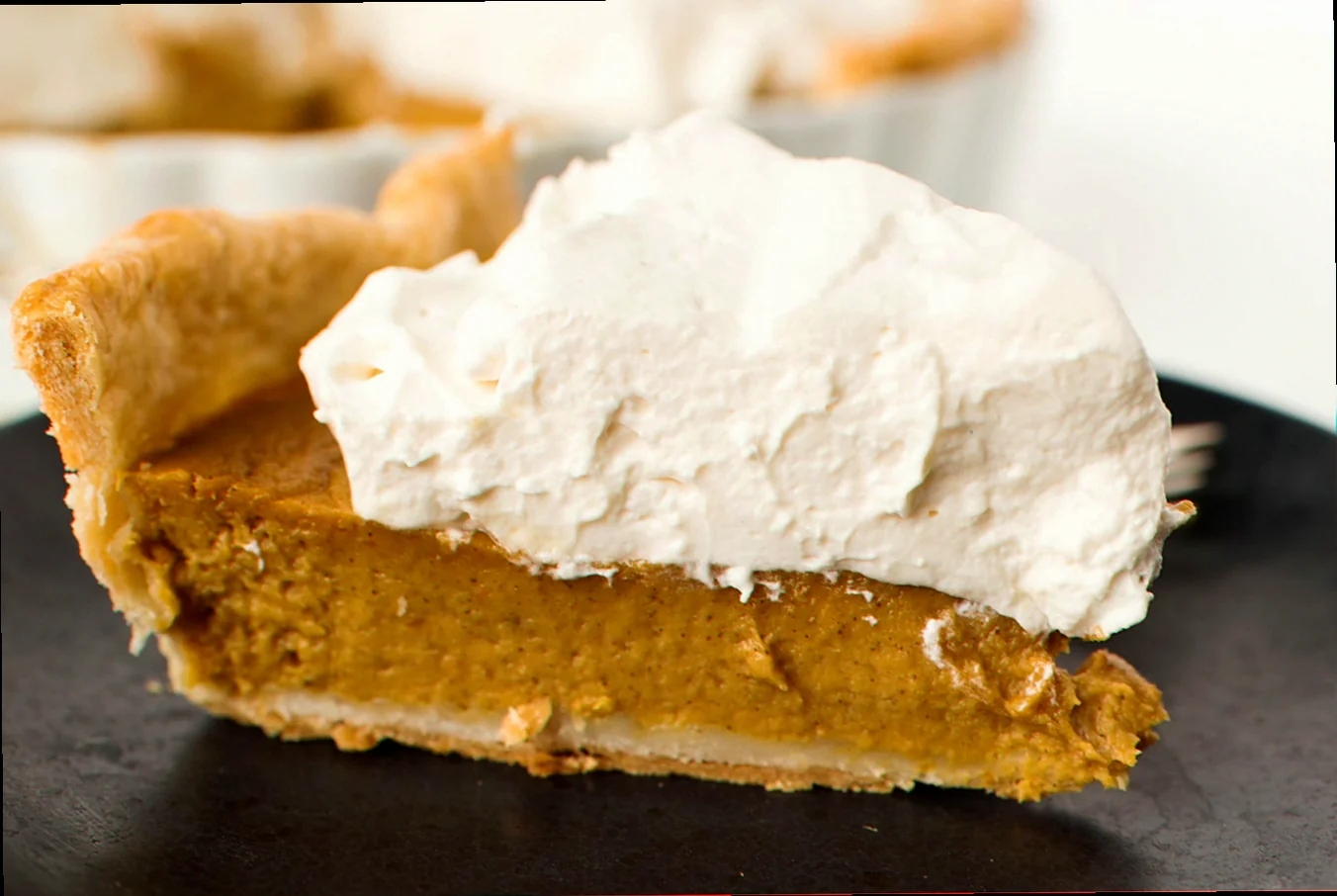
I spent five years serving pumpkin pie with a pathetic puddle of white foam before I realized that the secret wasn’t in the whisk or the brand of cream, but in the temperature of the metal itself. For a long time, I treated whipped cream as a frantic, last-minute afterthought—something I’d whip up while the coffee was brewing and the guests were already unbuttoning their trousers. It always ended in disaster: either a grainy, over-whipped mess that tasted like sweet butter, or a weeping liquid that slid off the slice of pie like a melting glacier. It wasn’t until I embraced the Cold-Bowl-Cold-Whisk Synergy that I finally produced a topping worthy of the labor I put into my crust. This revelation—that every single piece of equipment must be as close to 0°C as possible—is the boundary between a grocery-store imitation and a professional-grade garnish.
Why Most Versions of Whipped Cream for Pumpkin Pie Fail
The “wrong way” is what I call the Room Temperature Rush. Most people grab a carton of cream from the fridge but use a bowl and whisk that have been sitting in a 22°C kitchen, or worse, near a hot oven where the pie just finished baking. This is a recipe for structural failure. When you beat cream in a warm bowl, the milk fat begins to soften and melt. Instead of forming a stable network of air bubbles held together by firm fat globules, you get a weak, greasy emulsion. It looks okay for thirty seconds, and then it “weeps,” leaving a watery residue at the bottom of the bowl and a flat, sad film on your pie. The texture of poorly made cream is airy and fleeting; a proper whipped cream should be dense, velvety, and hold its shape with the defiance of a marble statue.
The Ingredients That Actually Matter
I’ve learned that the “standard” recipe of white sugar and vanilla is boring and lacks the backbone to stand up to the heavy spices of a pumpkin custard. I start with exactly 475ml of heavy cream—and it must be “heavy” or “clotted,” specifically with a fat content of at least 36%. Anything less and you’re just making expensive milk foam.
Then comes the sweetener. I’ve discarded white sugar entirely in favor of 30g of dark brown sugar. I choose dark brown because the molasses content adds a smoky, caramel-like depth that bridges the gap between the cream and the ginger, cloves, and cinnamon in the pie. To stabilize the structure—especially if I’m making this an hour before dessert—I whisk in 5g of cornstarch. This is a trick I learned after too many “melting” incidents; the starch binds with the moisture and prevents the cream from separating.
For the soul of the dish, I add 15ml of high-proof bourbon. I tried rum, and I tried brandy, but bourbon has that charred oak finish that makes the pumpkin pop. Finally, 5ml of pure vanilla bean paste (not the watery extract) provides those beautiful little black specks that signal to your guests that you didn’t just spray this out of a pressurized can.
The Moment Everything Changes: Cold-Bowl-Cold-Whisk Synergy
The single technique that transformed my cream from a liquid to a luscious cloud is the Cold-Bowl-Cold-Whisk Synergy. It sounds simple, but it is the science of fat crystallization. By placing my stainless steel bowl and my wire whisk attachment in the freezer for at least 20 minutes until they reach a frosty 0°C, I ensure that the fat in the 475ml of cream stays in a solid, jagged state. These solid fat shards are what actually “trap” the air bubbles. If the bowl is warm, the fat rounds off, the bubbles slip away, and you’re left with nothing. When I started freezing my gear, the whipping time dropped by half, and the stability of the peaks tripled. It is the non-negotiable foundation of the process.
How I Actually Make It Now — Step by Step
I don’t approach the bowl until the pie is completely cool. Whipping cream to put on a hot pie is a fool’s errand; the heat will melt the fat instantly regardless of how well you’ve whipped it.
The Pre-Chill: I place my large metal mixing bowl and the whisk in the freezer. I leave them there until a thin layer of frost forms on the steel. I also make sure the 475ml of cream stays in the coldest part of the refrigerator—usually the back of the bottom shelf—until the very second I am ready to pour.
The Infusion: I pour the cold cream into the frozen bowl. I immediately sift in the 30g of dark brown sugar and the 5g of cornstarch. Sifting is vital here; brown sugar loves to clump, and finding a hard nugget of molasses in a cloud of cream is a textural nightmare. I add the 15ml of bourbon and 5ml of vanilla paste now, while the liquid is still still.
The Slow Ascent: I start my mixer on the lowest speed. Most people blast it to high immediately, but that creates large, unstable bubbles. I keep it low for about 60 seconds, watching for the tiny bubbles to form a uniform foam. This builds a “micro-bubble” foundation. I listen for the sound to change from a splashy liquid to a muffled, thicker thud.
The Peak Watch: I increase the speed to medium-high. I never leave the bowl. I’m looking for the moment the whisk leaves distinct tracks in the cream that don’t fill back in. I stop the mixer frequently to check. I am aiming for “stiff peaks”—where I can lift the whisk and the cream stands straight up like a mountain top without drooping. If it looks slightly grainy, I’ve gone five seconds too far; if it’s glossy and firm, it’s perfect.
The Failures I Still See — and How to Fix Them
- The Butter Point: This happens when you get distracted. The cream loses its gloss and starts to look curdled and yellow. It’s the result of the fat membranes breaking and clumping. You can sometimes save this by gently folding in two tablespoons of fresh, cold liquid cream and whisking by hand, but if it’s too far gone, congratulations—you’ve made delicious bourbon butter. Save it for toast.
- The Grainy Grittiness: This is caused by using cold brown sugar that hasn’t dissolved. If I see this happening, I stop and let the mixture sit for two minutes to let the sugar moisture dissolve, then give it a final, very slow whisk.
- The Weep: If the cream starts leaking water onto the pie after an hour, it’s because you skipped the cornstarch or didn’t whip it long enough. The fix is prevention: always use a stabilizer (cornstarch or a touch of gelatin) if the cream needs to sit for more than ten minutes.
When I Make This and What I Serve It With
This is my Thanksgiving centerpiece. I don’t make it for birthdays or casual Tuesdays; it is reserved for the heavy, spice-laden desserts of November and December. It sits naturally atop a traditional pumpkin pie, but I’ve found it is even more transformative when served with a dark, salty Pecan Tart. The bourbon in the cream talks to the nuts in the tart perfectly. For a drink pairing, I avoid anything too sweet. A bitter, black coffee or a neat pour of the same bourbon I used in the cream (served at about 18°C) cuts through the richness and cleans the palate for the next bite.
Substitutions I’ve Tested Honestly
- Dark Brown Sugar → Maple Syrup: I tried 30ml of Grade A maple syrup. The flavor was incredible, but the extra liquid made the cream slightly softer. It’s a great swap if you want a “floppy” cream, but not if you want stiff peaks.
- Bourbon → Dark Rum: This works well. It gives it a more “tropical” or “toffee” vibe. It’s an acceptable swap if your liquor cabinet is low on whiskey.
- Dairy Cream → Coconut Cream: I’ve done this for vegan guests. You must use the thick part of a chilled can of full-fat coconut milk. It whips, but it lacks the dairy “clash” that makes pumpkin pie work. It’s a 6/10 substitute—functional but not transcendent.
Questions I Get Asked About Whipped Cream for Pumpkin Pie
Can I make this in a food processor?
You can, but you shouldn’t. A food processor works too fast and doesn’t incorporate enough air, resulting in a dense, heavy cream that feels like wet cement. Use a whisk or a stand mixer to get that cloud-like lift.
Related topics: Pecan sour cream pie crust recipe · What is in pumpkin pie recipe · 131 main banana cream pie recipe
Why not just use powdered sugar?
Powdered sugar contains cornstarch anyway, which helps with stability, but it tastes “dusty” to me. I prefer the complex, burnt-sugar flavor of dark brown sugar. If you must use powdered sugar, use about 40g to get the same sweetness level.
How long will it actually last in the fridge?
With the 5g of cornstarch I recommend, it will hold its shape for about 4 to 6 hours. Without it, you have maybe 30 minutes before it starts to lose its soul. Never whip it more than half a day in advance; the fridge is a humid place, and whipped cream is a sponge for “fridge smells.”