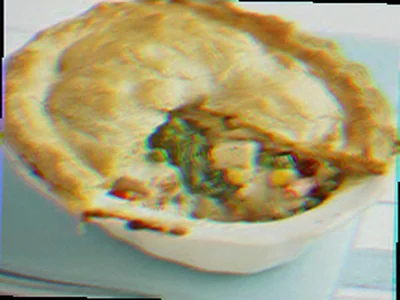
The most devastating failure in eggless vegetarian pie-making is the Structural Collapse, where a crumbly, dry crust disintegrates upon contact with the fork, or the Soggy Bottom, where the vegetable juices turn the base into a grey, translucent paste. These failures occur because you have removed the primary binder (egg) without compensating for its structural and emulsifying properties. This diagnostic guide identifies every failure mode in egg-free savory pies and provides the precise chemical and technical fixes to ensure a crisp, golden result.
What a Perfect Eggless Vegetarian Pie Actually Looks, Feels, and Tastes Like
The benchmark for success is a pie that defies its lack of egg through mechanical aeration and starch-based thickening.
| Stage | Success marker — what you should see / feel / smell / hear |
|---|---|
| Raw Dough | Cold to the touch (approx. 10–15°C); visible, pea-sized chunks of fat; non-sticky and “short” texture that holds when squeezed but breaks cleanly. |
| Mid-Bake | The “Sizzle and Steam” phase; the aroma of toasted grain and butter/fat; the crust should be visibly puffing as water evaporates from the fat layers. |
| At the Finish | A deep “Old Gold” hue (achieved via sugar-protein browning, not egg yolk); internal filling temperature of 90°C to ensure starches have fully hydrated and thickened. |
| When Serving | An audible “crunch” when the knife pierces the lid; distinct, flaky layers in the pastry; a filling that flows slowly like lava rather than running like soup. |
The Ingredient Failures — Wrong Choices Before You Even Start Cooking
- The Crumbly Crust Collapse: caused by using low-protein flour (cake flour) or low-fat “spreads” with high water content → fix: Use All-Purpose Flour with at least 10.5% protein and unsalted butter with 82% fat minimum or high-quality vegetable shortening. Protein is required to form the gluten “net” that eggs usually help support.
- The Pale Finish: caused by a lack of Maillard reaction (eggs provide the protein/fat for browning) → fix: Brush the crust with a mixture of 15ml heavy cream and 2g granulated sugar or a 1:1 ratio of maple syrup and soy milk.
- The Gritty Filling: caused by using raw flour as a thickener without a fat-based roux → fix: Use Cornstarch or Arrowroot powder dissolved in a cold liquid slurry (1:2 ratio) to ensure a smooth, translucent bind without the “floury” mouthfeel.
The Technique Failures — What Goes Wrong During Cooking
- The Melted Puddle (Greasy Crust): what it looks like: The crust loses its shape and pools at the bottom of the tin → caused by Warm Fat Integration. If the fat melts before it hits the oven, it soaks into the flour instead of creating steam-pockets → fix: Freeze your butter cubes for 15 minutes before mixing and ensure your water is 4°C (iced).
- The Soggy Bottom: symptom: The base is wet and doughy while the top is burnt → cause: Moisture migration from the vegetables → fix: Blind bake the crust at 200°C for 12 minutes using weights, then brush the hot base with a “moisture barrier” of melted cocoa butter or a thin layer of mustard before adding the filling.
- The Gaping Lid: symptom: A large air pocket forms between the filling and the top crust → cause: Lack of steam vents or shrinking filling → fix: Cut three 2cm slits in the center of the lid and ensure your filling is completely cold (room temp or below) before topping with pastry.
- The Split Sauce: symptom: The creamy interior looks curdled or oily → cause: Boiling the dairy/plant-milk base too rapidly without an emulsifier (which egg yolks usually provide) → fix: Maintain a gentle simmer (85-90°C) and whisk in 1g of mustard powder or 2g of nutritional yeast; both contain natural emulsifiers (lecithin).
The Equipment Failures — When Your Tools Are the Problem
- Glass vs. Metal Pie Dishes: Glass is a poor conductor of heat and often leads to a Soggy Bottom. If using glass, you must bake on the lowest oven rack. A heavy-gauge dull metal pan is preferred as it absorbs and radiates heat instantly to crisp the base.
- The “Hand-Mixing” Heat Failure: Using warm hands to rub in fat causes the Melted Puddle. Use a pastry blender (wire cutter) or a food processor (pulse mode only) to keep the fat chunks discrete and cold.
- The Steam Trap: Deep-dish ceramic vessels hold too much internal moisture. If using ceramic, you must use a pie bird (ceramic vent) in the center to allow steam to escape, preventing the lid from becoming a “boiled” dough.
The Full Recipe — Built Around Preventing Every Failure Above
The Crust (Shortcrust Style)
- 300g All-Purpose Flour (11% protein) — [Prevents structural collapse]
- 150g Unsalted Butter, cubed and frozen — [Prevents greasy/flat pastry]
- 5g Fine Sea Salt — [Essential for flavor since eggs are absent]
- 60ml-80ml Ice Water — [Amount varies to prevent “Dusty Dough” vs “Sticky Mess”]
- 5ml Apple Cider Vinegar — [Inhibits excessive gluten for tenderness without egg]
The Filling (Vegetable Velouté)
- 500g Mixed Vegetables (Carrots, Peas, Sautéed Mushrooms) — [Sautéing first prevents water release/Soggy Bottom]
- 400ml Vegetable Stock + 100ml Heavy Cream (or Coconut Cream)
- 30g Cornstarch — [Provides the “Egg-Free Bind”]
- 2g Mustard Powder — [Emulsifies the sauce to prevent splitting]
Method:
- Pulse and Chill: Combine flour, salt, and frozen butter in a processor. Pulse until chunks are the size of peas — [prevents “Melted Puddle”] — success marker: Dough looks like coarse sand with visible yellow pebbles.
- The Hydration Control: Add vinegar and water 1 tablespoon at a time. Stop when the dough just holds together — [prevents “Rubbery Crust”] — success marker: Dough should not stick to your hands. Chill for 60 minutes.
- The Moisture Barrier (Blind Bake): Roll dough to 3mm, fit to tin, and bake at 200°C with weights for 12 mins — [prevents “Soggy Bottom”] — success marker: Pastry surface looks matte and feels dry to the touch.
- The Filling Stabilizer: Sauté vegetables until they stop releasing steam. Add stock and mustard. Add cornstarch slurry — [prevents “Liquid Overflow”] — success marker: Sauce coats the back of a spoon and doesn’t run off.
- The Assembly: Pour cold filling into the pre-baked shell. Top with the second crust. Cut vents — [prevents “Gaping Lid”].
- The Wash: Brush with cream/sugar mixture — [prevents “Pale Finish”]. Bake at 190°C for 30–35 minutes.
How to Rescue Vegetarian Pie When It Has Already Gone Wrong
- If the crust is “Pale and Soft” at the end of bake time: Do not keep baking at the same temp. Increase oven to 220°C and move the pie to the lowest rack for 5–7 minutes. This “Heat-Blast” can sometimes save a soggy base.
- If the filling is “Soup-like” after slicing: The starch did not reach its gelatinization point or was sheared by over-stirring. You cannot fix this inside the pie. Rescue: Serve in bowls and top with “Crust Shards.” Next time, ensure the filling bubbles before the pie comes out.
- If the dough is “Sticky and Unrollable”: You added too much water. Rescue: Do not add more flour (which makes it tough). Place the dough between two sheets of parchment paper and roll it out, then freeze the whole sheet for 10 minutes before peeling the paper off.
Make-Ahead: Which Failures This Introduces and How to Avoid Them
- The “Retrogradation” Failure: When stored in the fridge, the starches in the filling can “weep” liquid (syneresis), leading to a Soggy Bottom during reheating.
- The Fix: If making ahead, store the filling and the raw dough separately. Assemble and bake only when ready to eat.
- Reheating Protocol: Never use a microwave (results in “Microwave Mush”). Reheat in a 175°C oven for 15 minutes covered loosely with foil to protect the edges, then 5 minutes uncovered to re-crisp the fats.
Related topics: Cherry pie pie recipes · Italian pie recipes · Cookie crumb pie crust recipes
Diagnostic FAQ — Real Failures, Real Fixes
My pie lid shrank away from the edges — what went wrong?
This is the Elastic Shrink failure. You overworked the dough or didn’t let it rest. The gluten was “stretched” and snapped back in the heat. Fix: After rolling the dough, let it rest in the fridge for 20 minutes before baking to relax the gluten.
It looked perfect but the bottom is translucent — where did I go wrong?
This is Under-Baking. The fat melted but the starch in the flour didn’t “set.” Fix: Use a metal pie tin and ensure the oven is fully preheated to 200°C before the pie goes in.
The filling is bland despite using salt — why?
The Acid Deficit. Without eggs to provide richness, eggless pies need acid to brighten the vegetable flavors. Fix: Add 5ml of lemon juice or sherry vinegar to the filling just before assembling.