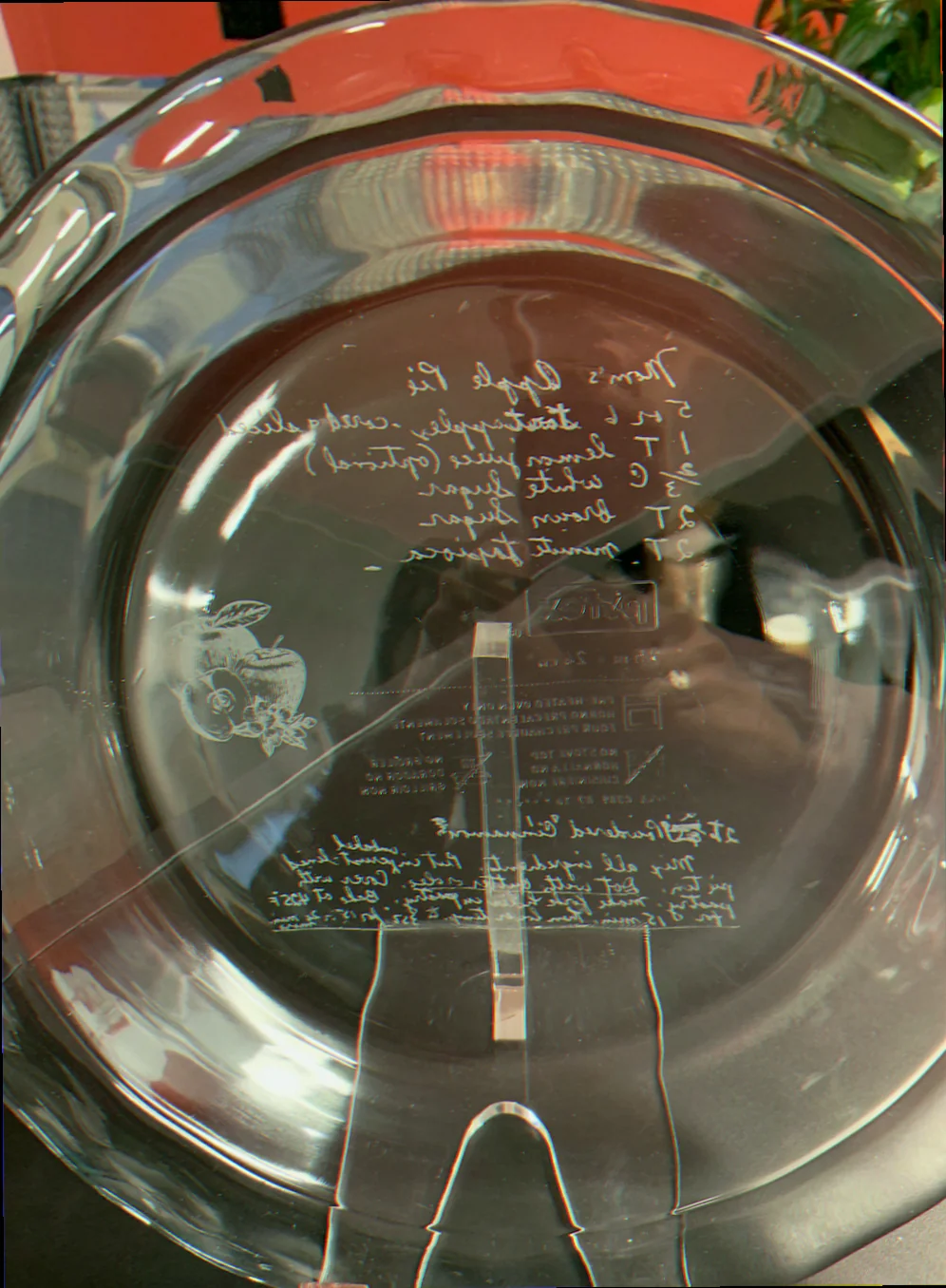
In a sun-drenched kitchen in 1950s Ohio, a woman presses a graphite pencil into a stained index card, carefully transcribing a sequence of measurements her mother learned by ear in a drafty Somerset farmhouse fifty years prior. This act of transcription—moving a recipe from the fluid realm of muscle memory to the permanence of the written word—marked a pivotal shift in domestic history. Decades later, that same handwriting would be scanned, etched, and fired into the glaze of a ceramic dish, creating the “personalized recipe pie plate,” a modern reliquary that attempts to freeze the ephemeral nature of the family table into a permanent, functional artifact.
Where the Heirloom Pie Comes From — and Why It Was Invented
The dish typically immortalized on these plates—the fruit pie—is an evolutionary survivor of necessity. In the damp, temperate climates of 14th-century Medieval England and Northern Europe, the “coffyn” was the progenitor of the modern pie. These were not the flaky, buttery crusts we recognize today, but thick, sturdy walls of flour and water designed to act as a primitive Tupperware. The crust was a preservation vessel, protecting the interior contents from bacteria and dehydration in an era before refrigeration.
By the time the Forme of Cury (the oldest known English cookbook) was written for the court of Richard II in 1390, the pie had begun to transition from a utilitarian meat-storage device to a vehicle for the seasonal gluts of the orchard. In the agricultural cycles of the British Isles, the pie solved the problem of the “hungry gap” and the harvest surplus. It allowed for the consumption of windfallen, astringent fruits that were too fibrous or sour to be eaten raw, utilizing the intense heat of wood-fired communal ovens to break down cellulose and concentrate natural sugars.
The Ingredients as Historical Artefacts
To understand the pie etched onto a ceramic plate is to trace the history of global trade, colonization, and the movement of species across the Atlantic.
- The Apple (Malus domestica): Though synonymous with the American identity, the apple is a migrant. Its genetic home is the Tian Shan mountains of Kazakhstan. It traveled the Silk Road to Europe before being carried to the Americas by colonists in the 17th century. Originally planted for cider (a safer alternative to stagnant water), the “eating apple” was a result of centuries of grafting and selective breeding, turning a bitter, tannic fruit into the sugar-dense cultivars like the Northern Spy or Granny Smith found in heirloom recipes.
- Cinnamon (Cinnamomum verum): This ingredient represents the reach of the Dutch East India Company and the brutal monopolies of the spice trade. Originally sourced from Sri Lanka (formerly Ceylon), cinnamon was once so valuable it served as a status symbol for the European elite. Its presence in a “common” family pie recipe is a testament to the 19th-century democratization of spices as global shipping lanes expanded.
- Lard and Butter: The fat used in the crust is a map of regional geography. In the pig-rearing regions of the American South and rural England, leaf lard provided the “short” texture—a structural result of fat inhibiting gluten development. As dairy farming became industrialized in the late 19th century, butter became the hallmark of the “refined” French-influenced pastry, introducing the Maillard reaction (browning) and a rich, butyraceous flavor profile that lard lacked.
The Harvest Ritual — When and Why This Dish Is Made
The pie is rarely a solitary meal; it is a communal anchor. In its origin context, the baking of the pie was synchronized with the “Micahelmas” harvest or the American Thanksgiving—rituals of gratitude and survival. It signaled the end of the labor-intensive growing season. The act of “sharing a pie” is a social contract; the circular format necessitates equal division, a geometric representation of fairness within a family or community.
The ritual also encompasses the gendered labor of the domestic sphere. For centuries, the “by feel” method of pastry making—knowing the exact moment the flour and fat resemble “coarse crumbs” based on the humidity of the room—was a form of tacit knowledge passed from mother to daughter. The modern recipe plate is a reaction to the breaking of this chain; as the oral tradition of baking began to fade in the mid-20th century, the need to “fix” the recipe in stone (or ceramic) became an act of cultural preservation.
How Migration Changed the Pie Forever
As the English “coffyn” crossed the Atlantic, it underwent a radical transformation. The heavy, inedible rye-flour crusts of the Old World met the abundance of American wheat and the influence of Dutch and German “Pennsylvania Dutch” settlers. The Dutch introduced the streusel or crumble top, reducing the need for a difficult-to-master top crust, while the availability of cheap sugar from the Caribbean plantations in the 18th and 19th centuries shifted the flavor profile from savory-tart to the high-sugar dessert we recognize today.
The migration of the recipe also saw the loss of “standing crusts.” In the frontier, without formal ceramic baking dishes, the “plate pie” or “tin pie” emerged—shallower, faster to bake, and requiring less fuel. This adaptation eventually led to the standardized 9-inch pie tin, the very shape that the personalized recipe plate seeks to replicate in a more permanent, sentimental medium.
How to Make the Heirloom Apple Pie — The Recipe in Full
This recipe is designed for a standard 23cm (9-inch) pie plate. It prioritizes the “short” texture characteristic of 19th-century Anglo-American baking.
| Ingredient | Quantity | Why it’s here |
|---|---|---|
| All-purpose flour | 375g | Provides the structure; low protein for a tender crumb. |
| Unsalted butter (chilled) | 225g | For lamination and steam-leavened flakiness. |
| Ice water | 60–80ml | Hydrates the flour while keeping the fat solid. |
| Fine sea salt | 5g | Regulates fermentation and enhances fruit sugars. |
| Heirloom apples (firm) | 1.2kg | A mix of tart and sweet for complex acidity. |
| Granulated sugar | 150g | For maceration and caramelization of juices. |
| Ground cinnamon | 4g | A nod to the historical spice trade; warmth. |
| Cornstarch | 20g | To bind the juices, preventing a “soggy bottom.” |
Method: Begin by incorporating the chilled butter into the flour and salt. Use the fingertips to rub the fat into the dry ingredients—not until uniform, but until the mixture resembles a landscape of pebbles and sand. This creates the “short” texture; the fat coats the flour particles, preventing the development of long gluten strands that would make the crust tough. Gradually add the ice water, stop the moment the dough can be pressed into a cohesive mass. Chill for at least 60 minutes at 4°C to allow the starch granules to fully hydrate and the fat to re-solidify.
Prepare the filling by peeling and slicing the apples into 5mm crescents. Toss with the sugar, cinnamon, and cornstarch. Let this sit for 20 minutes—a process called maceration, which draws out excess moisture that would otherwise steam the crust from the inside out.
Roll out the bottom crust to a 3mm thickness and drape it into the dish. Pile the apples high in the center; they will shrink significantly as their cell walls collapse during baking. Top with the second crust, crimping the edges to create a hermetic seal. Cut three vents in the top—a functional necessity to allow steam to escape, preventing the “coffyn” from exploding. Bake at 200°C for 20 minutes to set the pastry, then reduce to 175°C for a further 45 minutes until the internal juices are visibly bubbling and the crust is a deep ochre.
The Tension — What Authenticity Actually Means for This Dish
The primary tension in the world of the heirloom pie is the conflict between “The Script” and “The Intuition.” Purists argue that a recipe fired onto a plate is a dead thing—it cannot account for the moisture content of a specific year’s apple harvest or the protein variance in a bag of flour.
The “authenticity” of a pie lies not in the exact grammage, but in the technique of the maker. However, the modern adaptation—the recipe plate—serves a different kind of authenticity: the authenticity of lineage. While a modern professional baker might argue that a recipe calling for “a pinch” or “enough water” is imprecise, for the family, that imprecision is the point. It represents a specific person’s touch, a specific moment in time when the dish was a living expression of care.
What the Recipe Pie Plate Has Become — and What That Tells Us
Today, the personalized recipe pie plate is a high-grossing item on artisanal marketplaces like Etsy. This tells us that we are in a period of intense “nostalgia-longing.” As we move further away from a world where we spend four hours making a crust from scratch, we cling more tightly to the evidence that our ancestors did.
The dish has moved from a survival necessity (the “coffyn”) to a seasonal treat, and finally to a decorative icon. When we fire a grandmother’s handwriting into a ceramic plate, we are acknowledging that the dish itself might eventually disappear from our weekly rotation, but the idea of the dish—the ritual of the hearth and the continuity of the family—must be preserved in a form that cannot be stained, torn, or forgotten.
Questions About the Heirloom Pie
What is the single ingredient you should never substitute in an heirloom pie?
The fat source, specifically high-quality butter or lard. Substituting these with vegetable shortening or margarine fundamentally alters the melting point and the flavor profile. Butter provides the water content necessary for steam-leavened layers, while shortening produces a crumbly, flavorless texture that lacks the historical “shortness” and golden browning of a traditional crust.
Related topics: Recipe coconut custard pie filling · Best tasting apple pie filling recipe · Recipe to make apple pie crust
How does the pie differ between the UK and the US?
The UK version often retains its savory roots or uses a “hot water crust” (made by boiling water and lard), which results in a sturdy, hand-raised pie that can be eaten cold. The US version is almost exclusively a “short” crust, served warm or at room temperature, and is significantly sweeter, reflecting the 19th-century American access to refined sugar.
Is there a version of this dish that is accessible to make at home without special equipment?
Yes. The “Galette” or “Rustic Tart” is the ancestral cousin of the pie. It requires no pie plate at all. The dough is rolled out on a flat baking sheet, the fruit is piled in the center, and the edges are simply folded over the fruit. It utilizes the same ingredients and historical techniques but removes the barrier of the specialized ceramic vessel.