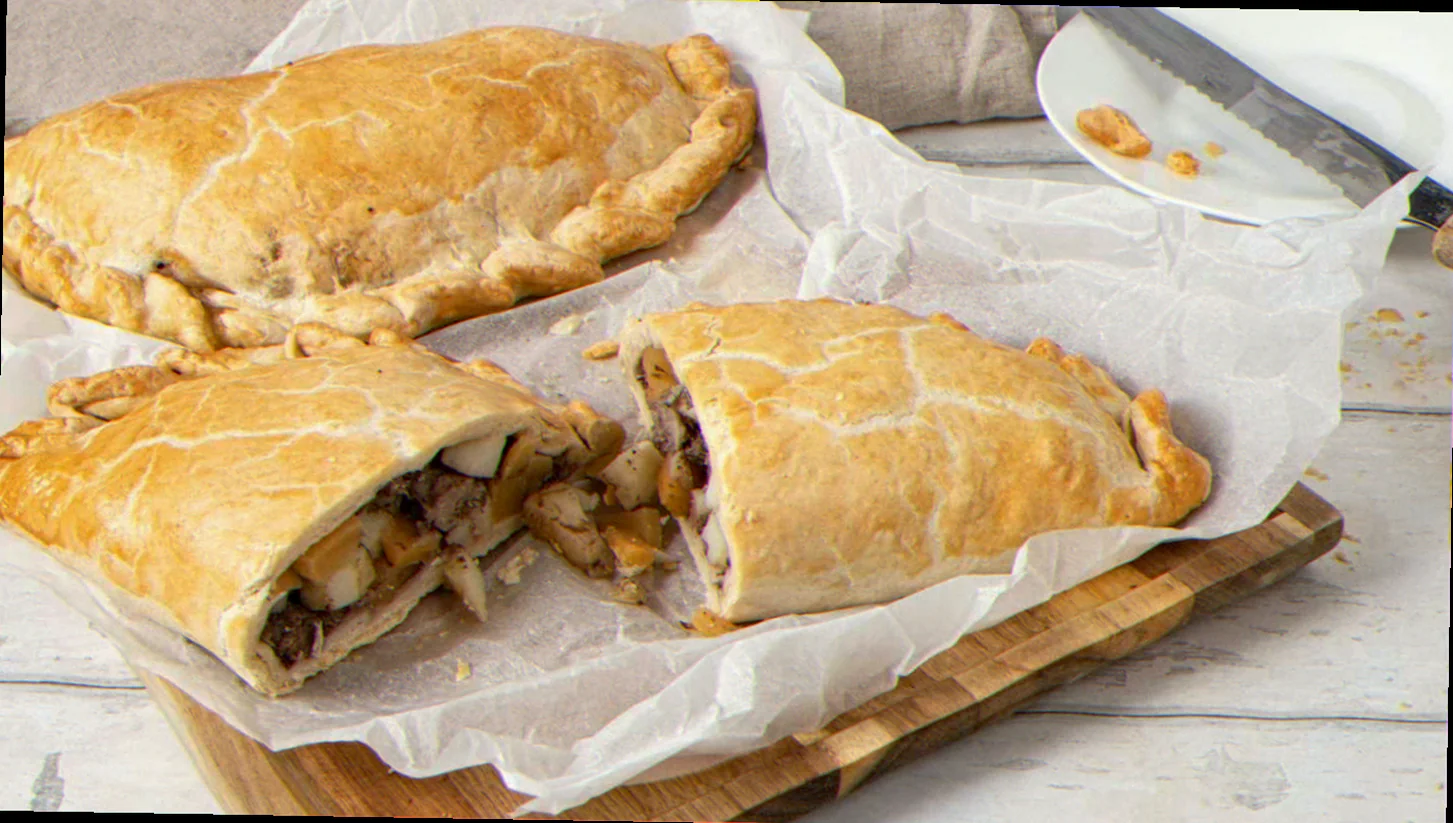
The air three hundred metres below the granite surface of the St Just district is thick with the scent of damp earth, metallic ore, and the acrid smoke of tallow candles. Here, in the mid-19th century, a Cornish tin miner pauses his rhythmic striking of the rock to reach for a heavy, linen-wrapped parcel nestled in his pocket. As he unwraps it, the steam rises from a golden, crescent-shaped crust, releasing the scent of slow-cooked beef and peppery roots—a portable heat source and a life-sustaining calorie bomb designed for the most punishing environment on earth.
Where the Pasty Comes From — and Why It Was Invented
The pasty is not merely a dish; it is a piece of industrial engineering. While “pasty” as a term for meat baked in a crust appears in the records of 14th-century royalty and even in the works of Chaucer, the specific form we recognize today was forged in the heat of the Industrial Revolution in Cornwall, England. By the 1700s and 1800s, Cornwall was the mining capital of the world, extracting tin and copper to fuel the British Empire.
The geography of Cornwall—a rugged, isolated peninsula surrounded by the Atlantic—dictated a diet of necessity. The pasty solved a specific logistical problem: how to provide a hot, calorie-dense, and contamination-proof meal to men working in deep, often toxic shafts. The thick, “crimped” edge of the pastry served a dual purpose. It was a structural rib that kept the pasty from collapsing, but more importantly, it served as a disposable handle. Miners’ hands were often caked in arsenic, lead, and copper dust; by holding the pasty by the crimp, they could consume the clean interior and discard the tainted crust into the “goaf” (the worked-out area of the mine) to appease the “Knockers”—the mischievous spirits of the underground.
The Ingredients as Historical Artefacts
To look at a pasty is to look at a map of 18th-century agricultural shifts and global trade. The “holy trinity” of the filling—beef, potato, and swede—represents a moment when European peasant diets shifted from grains to tubers.
- Beef (Beef Skirt): Historically, the pasty was the destination for “skirt” steak, the diaphragm muscle of the cow. This cut was favored not for its tenderness, but for its lack of bone and its high fat-to-lean ratio. In the confined heat of the pastry shell, the fat renders out, essentially “confit-ing” the vegetables in a sealed vacuum.
- The Potato (Solanum tuberosum): Originating in the Andean highlands, the potato arrived in the UK in the late 16th century but took nearly 200 years to become a staple. In the pasty, the potato acts as a structural absorbent, soaking up the juices of the meat and preventing the pastry from becoming soggy from the inside out.
- The Swede (Brassica napobrassica): In Cornwall, this is stubbornly referred to as a “turnip.” A hybrid between a cabbage and a turnip, the swede was introduced to Britain from Sweden in the late 18th century. It provides a crucial earthy sweetness and a texture that remains firm during the long bake, preventing the filling from turning into a homogenous mush.
The Ritual of the Mine — When and Why This Dish Is Made
In its original context, the pasty followed the rhythm of the “core”—the eight-hour mining shift. It was a daily ritual, prepared by women in the early morning and often kept warm in “pasty ovens” at the surface or carried against the body for warmth. However, the pasty also carried a heavy weight of superstition. It was considered bad luck to take a pasty on a boat (a nod to the rivalry between miners and fishermen), and the “proper” way to eat it was from one end to the other, never across the middle.
There is also the “half-and-half” tradition, a culinary ritual where one end of the pasty contained the savory meat filling and the other end contained fruit or jam, separated by a wall of pastry. This provided a two-course meal in a single handheld vessel, a masterpiece of domestic efficiency for the working poor.
How the “Cousin Jacks” Changed the Pasty Forever
In the mid-19th century, the Cornish mining industry collapsed as cheaper ore was discovered abroad. This triggered the “Great Migration,” where Cornish miners—known globally as “Cousin Jacks”—took their expertise and their pasties to the four corners of the earth.
In the Upper Peninsula of Michigan, the pasty became the unofficial state dish, though it evolved to include carrots—a move that would be considered heresy in Penzance. In Real del Monte, Mexico, the “pasty” became the paste. The Mexican miners added habanero peppers and local spices, transforming the Cornish staple into a Latin American icon that is still celebrated with an annual festival. In Australia’s “Little Cornwall” (the Yorke Peninsula), the pasty remained closer to the original but adapted to the searing heat of the outback. In every location, the “authentic” Cornish pasty was sacrificed at the altar of local availability, yet the core concept—the portable, self-contained oven—remained invincible.
How to Make the Cornish Pasty — The Recipe in Full
A true pasty is never precooked. The ingredients must be placed in the pastry raw, allowing the flavors to fuse through a slow, internal steam-bake.
| Ingredient | Quantity | Why it’s here |
|---|---|---|
| Strong Bread Flour | 500g | Provides the gluten structure needed to hold the heavy filling without tearing. |
| Lard | 125g | Traditional animal fat that creates a short, sturdy, and water-resistant crust. |
| Butter (Cold) | 125g | Adds flavor and flake to the pastry, balancing the structural integrity of the lard. |
| Beef Skirt Steak | 400g | Coarsely chopped; its fat content provides the “gravy” within the pasty. |
| Potato (Maris Piper) | 300g | Waxy enough to hold shape, but starchy enough to thicken the juices. |
| Swede (Yellow Turnip) | 150g | Provides the essential earthy sweetness and traditional “bite.” |
| Onion | 150g | Finely diced; it melts into the meat to provide moisture and aroma. |
| Salt & Black Pepper | To taste | Generous pepper is a hallmark of the Cornish style, cutting through the fat. |
Method: Begin by rubbing the lard and butter into the flour with your fingertips until the mixture resembles coarse sand. Add ice-cold water a tablespoon at a time, bringing the dough together into a firm, resilient ball. This pastry must be stronger than a standard pie crust; wrap it and chill for at least three hours to allow the gluten to relax.
Prepare the filling by hand-chopping the beef into 1cm cubes—never use ground meat, as the texture will become grainy. Peel and slice the potato and swede into thin “chipped” discs, roughly the size of a thumbnail. In the traditional method, these ingredients are never mixed in a bowl beforehand; they are layered directly onto the pastry to ensure the juices distribute evenly.
Roll out a circle of pastry about 20cm in diameter. Arrange a layer of swede, then potato, then onion, and finally the beef. Season each layer aggressively with salt and cracked black pepper. Dampen the edges of the pastry with water and fold the circle over the filling to create a semi-circle. Now comes the “crimp”: fold the edge over itself in a rhythmic, twisting motion to create a rope-like seam along the side. This is the structural spine of the dish.
Brush the pasties with an egg wash and bake at 190°C for 20 minutes, then reduce the heat to 160°C for another 40 minutes. This two-stage bake crisps the exterior before slowly simmering the raw interior in its own juices. The pasty is ready when the crust is a deep, burnished gold and the steam escaping the vent hole smells of roasted meat rather than raw onion.
The Tension — Authenticity vs. Accessibility
In 2011, the European Union granted the Cornish Pasty “Protected Geographical Indication” (PGI) status. This means that to be legally called a “Cornish Pasty,” it must be made in Cornwall, contain no carrots, and be crimped on the side, not the top.
This has created a fascinating cultural tension. To purists, the side-crimp is a non-negotiable link to the mining history. To the neighboring county of Devon—who claim they invented the pasty first, citing a 1510 record—the Cornish PGI is a piece of modern marketing. The “authenticity” of the pasty is a moving target; while the PGI protects the name, it cannot stop the global evolution of the form. The tension lies between the pasty as a protected museum piece and the pasty as a living, breathing food of the people that adapts to whatever ingredients are at hand.
What the Pasty Has Become — and What That Tells Us
Today, the pasty is a billion-pound industry in the UK, found in every train station and high street. It has moved from the darkness of the mines to the fluorescent lights of the “grab-and-go” economy. Yet, its enduring popularity tells us something profound about human culinary needs. We still crave the “handheld meal”—the convenience of the sandwich but with the soul-satisfying warmth of a roast dinner.
The pasty is a survivor. It survived the collapse of the mining industry, the introduction of the microwave, and the rise of global fast food. It remains a testament to the ingenuity of the working class: a dish designed to be eaten with dirty hands, in the dark, under the weight of the world, providing a moment of hot, peppery comfort in the face of hardship.
Questions About the Cornish Pasty
What is the single ingredient you should never substitute?
The Swede (Yellow Turnip). While you can swap the cuts of beef, the swede provides a specific chemical interaction. Its sugars caramelize at a different rate than the potato, providing the signature depth of flavor that distinguishes a pasty from a generic meat pie. Without it, the interior lacks its historical “earthy” profile.
Related topics: Recipe for cherry delight pie · Personalized recipe pie plate · Strasberg pie recipe
How does the pasty differ between Cornwall and Michigan?
The Michigan pasty (Upper Peninsula style) often includes carrots and is frequently served with ketchup or gravy on top. In Cornwall, the pasty is strictly self-contained and “dry”—the gravy is meant to be inside the crust, and adding condiments is often seen as a sign that the pasty was poorly made.
Is there a version that is accessible to make at home without special equipment?
Yes. While a traditional pasty requires a specific hand-crimping technique, the “home” version can be sealed by pressing the edges with the tines of a fork. While this would disqualify it from PGI status, the thermal physics of the raw-fill bake remain the same, providing the same flavor profile without the need for professional-level pastry skills.