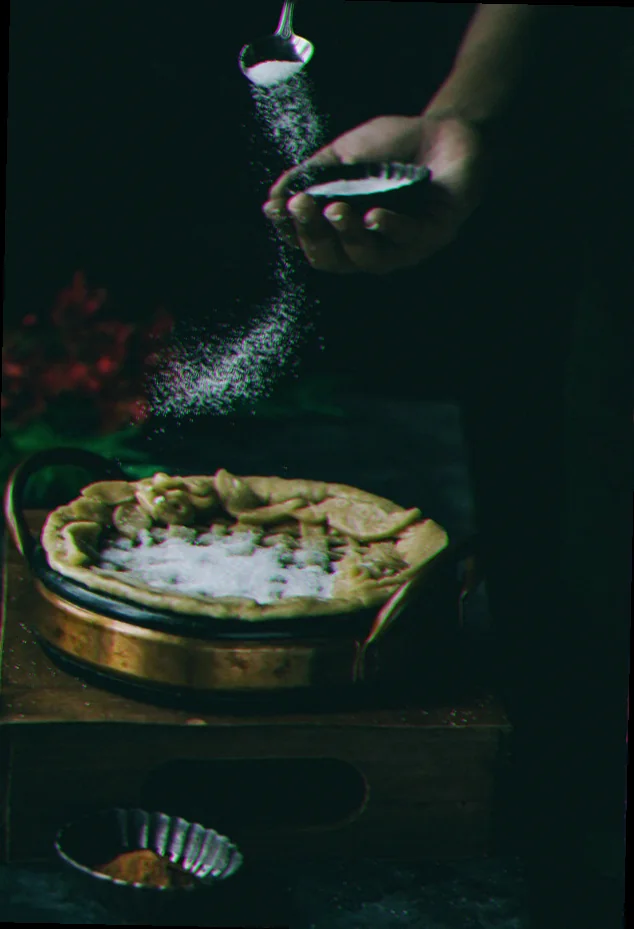
The hearth glows, a low ember hum against the chill of a late autumn evening. Outside, the wind rattles the casements of a sturdy farmhouse in the English countryside, circa the 17th century. Inside, a woman, her hands dusted with flour, carefully crimps the edges of a rustic pastry. This is not a grand feast, but a domestic ritual. The scent of baked apples, their tartness softened by sugar and spice, begins to fill the small kitchen. This is the genesis of a legacy: the humble, yet profound, apple pie, a dish born not of luxury, but of necessity and abundance, a testament to the season’s yield and the ingenuity of preservation.
Where Apple Pie Comes From — and Why It Was Invented
The story of apple pie is inextricably linked to the English countryside, specifically from the late medieval period onwards, gaining significant traction in the 16th and 17th centuries. It wasn’t invented as a dessert in the way we understand it today. Rather, it emerged from a practical need: how to preserve the bounty of the autumn apple harvest for consumption throughout the long, lean winter months. Apples, especially hardy varieties, could be stored for a considerable time, and baking them within a protective pastry crust was a method that not only kept them from spoiling but also rendered them palatable and digestible.
The early English apple pies were far from the sweet, fruit-forward confections of modern imagination. They were often quite savoury, sometimes incorporating meats like pork or beef, and the pastry itself was less about delicate flakiness and more about creating a sturdy, edible “coffin” or pie dish. This wasn’t a culinary flourish; it was a functional barrier against the elements and a way to consolidate ingredients. The availability of apples was crucial. England’s temperate climate and fertile soil have long supported apple cultivation, with various native and introduced varieties thriving. The development of orchards, particularly in regions like Kent and the West Country, ensured a consistent supply, making apples a staple ingredient.
The Ingredients as Historical Artefacts
The components of even a simple apple pie carry centuries of global history within them.
Apples: While apples originated in Central Asia, with evidence pointing to the mountains of Kazakhstan, their journey to England is a tale of millennia of human migration and agricultural development. The Romans are credited with introducing a wider variety of apples to Britain, and by the medieval period, apple cultivation was well-established. The specific varieties used in early pies were often tart and firm, chosen for their storage capabilities and ability to withstand long cooking times. Modern pies often favour sweeter, softer varieties, a significant departure that alters the fundamental flavour profile and texture.
Wheat Flour: The foundation of the pastry, wheat, has an even longer and more global history. Cultivated in the Fertile Crescent from around 9000 BCE, wheat arrived in Britain with early Neolithic farmers. Its ability to be milled into flour provided a versatile carbohydrate base for countless dishes, from bread to pies. The refinement of milling techniques over centuries led to the whiter, finer flours we use today, which contribute to a lighter pastry, a significant evolution from the coarser, whole-grain flours of the past.
Sugar: This is perhaps the ingredient with the most transformative historical arc in the context of apple pie. For centuries, sweeteners in England were primarily honey or fruit juices. The widespread availability of cane sugar only became a reality with the expansion of European colonial empires, particularly the British Empire’s involvement in the Caribbean sugar trade from the 17th century onwards. Early apple pies would have used sugar sparingly, if at all, relying on the natural sweetness of the apples. The increasing affordability and accessibility of sugar from the 18th century onwards dramatically shifted apple pie from a utilitarian dish to a dessert, imbuing it with its characteristic sweetness.
Harvest Festival — When and Why This Dish Is Made
In its English origins, apple pie was intrinsically linked to harvest festivals and the autumnal equinox. It was a celebration of the year’s successful gathering, a way to showcase the preservation techniques that would sustain the community through the colder months. While not a formal church sacrament, it was a deeply domestic and communal dish. Families would bake pies using the freshly picked apples, often a collaborative effort involving multiple generations. The pie was shared at harvest suppers, village gatherings, and within the family home as a comforting, nourishing meal. Its robust form made it suitable for picnics and journeys, and its ability to be served warm or at room temperature made it adaptable to various social contexts.
How Migration Changed Apple Pie Forever
The journey of apple pie across the Atlantic to North America is a pivotal moment in its history, driven by English colonial migration beginning in the 17th century. In the New World, the apple pie encountered both familiar and novel circumstances. The colonists brought their apple varieties and pie-making traditions with them, but the sheer abundance of apples in the vast orchards of North America, coupled with a growing availability of sugar (though still a luxury), led to an evolution.
In America, apple pie began to shed its savoury, meat-inclusive past and lean more definitively into its role as a dessert. The pastry, while still often hearty, began to favour flakier textures as culinary techniques developed. The American frontier spirit also embraced the pie; it was portable, economical, and a symbol of home and hearth in a new land. By the 19th century, the “all-American” apple pie began to take shape, distinct from its English progenitor. The availability of different apple varieties, the refinement of baking techniques, and the ever-increasing consumption of sugar all contributed to its transformation. The pie became a cultural icon, a symbol of American identity, a narrative woven into the fabric of the nation’s culinary identity, famously encapsulated in the phrase “as American as apple pie.”
How to Make Apple Pie — The Recipe in Full (Small Batch)
This recipe aims for a modest yet deeply satisfying small-batch apple pie, reflecting a modern desire for manageable portions without sacrificing the essence of tradition. It leans towards the American interpretation, acknowledging its dominant global presence, but with nods to the historical balance of tartness and spice.
| Ingredient | Quantity | Why it’s here |
|---|---|---|
| For the Pastry | ||
| All-purpose flour | 200g | The stable, cultivated grain that forms the pie’s protective shell, refined over centuries for optimal texture. |
| Unsalted butter, cold and cubed | 100g | Provides richness, flakiness, and a crucial binding element. Its coldness is key to creating steam pockets during baking. |
| Granulated sugar | 1 tbsp | A whisper of sweetness to temper the pastry’s neutrality, a nod to its dessert evolution. |
| Salt | ½ tsp | Enhances the flavour of the flour and butter, a fundamental flavour enhancer in baking. |
| Ice water | 4-6 tbsp | Binds the ingredients without developing gluten excessively, ensuring a tender crust. |
| For the Filling | ||
| Firm, tart apples (e.g., Granny Smith, Honeycrisp), peeled, cored, and sliced ½ cm thick | 400g (approx. 2-3 medium apples) | The star ingredient. A blend of tartness and firmness is essential for structure and flavour complexity, harkening back to traditional varieties. |
| Granulated sugar | 50g | Balances the apples’ tartness and aids in caramelisation. Adjust to your apples’ sweetness and your preference. |
| Light brown sugar | 25g | Adds a deeper, molasses-like sweetness and helps with a richer caramelisation. |
| All-purpose flour or cornstarch | 1 tbsp | Acts as a thickener, preventing a watery filling and ensuring the apples hold their shape. |
| Ground cinnamon | 1 tsp | The quintessential warm spice that complements apples, a legacy of the spice trade routes. |
| Ground nutmeg | ¼ tsp | Adds a subtle, aromatic warmth, often paired with cinnamon in historic spice blends. |
| Lemon juice | 1 tsp | Brightens the apple flavour and helps prevent browning. |
| Unsalted butter, cut into small pieces | 1 tbsp | Dotting the filling adds richness and helps create a glossy, flavourful syrup. |
| For the Wash (Optional) | ||
| Egg, beaten with 1 tsp water | 1 | Creates a golden, slightly crisp crust. |
| Granulated sugar | 1 tsp | For a sparkling finish. |
Method:
Begin by preparing the pastry. In a large bowl, whisk together the flour, 1 tbsp granulated sugar, and salt. Scatter the cold, cubed butter over the flour mixture. Using your fingertips or a pastry blender, quickly cut the butter into the flour until the mixture resembles coarse crumbs with some pea-sized pieces of butter remaining. These larger pieces are vital for flakiness. Gradually add the ice water, one tablespoon at a time, mixing until the dough just comes together. Be careful not to overmix. Turn the dough out onto a lightly floured surface, gently gather it into a disc, wrap in cling film, and refrigerate for at least 30 minutes.
While the dough chills, prepare the apple filling. In a large bowl, combine the sliced apples, granulated sugar, brown sugar, flour or cornstarch, cinnamon, nutmeg, and lemon juice. Toss gently to coat the apples evenly.
Preheat your oven to 200°C (180°C fan/Gas Mark 6).
Remove the chilled pastry dough from the refrigerator. On a lightly floured surface, roll out about two-thirds of the dough into a circle large enough to line a 20cm pie dish, about 3mm thick. Carefully transfer the dough to the pie dish, pressing it gently into the base and up the sides. Trim any excess dough, leaving a slight overhang.
Spoon the apple filling into the pastry-lined dish. Dot the top of the apple filling with the small pieces of butter.
Roll out the remaining pastry dough. You can create a solid top crust, cut vents into it, or cut it into strips to make a lattice top. For a small batch pie, a simple solid top crust with a few vents is traditional and effective. Drape the pastry over the filling. Trim the edges, then crimp the top and bottom crusts together firmly to seal. If using a solid top, cut a few slits in the top to allow steam to escape.
If desired, brush the top crust with the egg wash and sprinkle with sugar for a golden sheen.
Place the pie on a baking sheet (to catch any drips) and bake in the preheated oven for 20 minutes. Then, reduce the oven temperature to 180°C (160°C fan/Gas Mark 4) and continue baking for another 30-40 minutes, or until the crust is golden brown and the filling is bubbling through the vents. If the crust begins to brown too quickly, loosely tent the pie with foil.
Allow the pie to cool on a wire rack for at least 2-3 hours before slicing. This crucial resting period allows the filling to set, preventing a soggy bottom and ensuring clean slices.
The Tension — What Authenticity Actually Means for This Dish
The concept of “authentic” apple pie is a fascinating battleground. For some, authenticity lies in the 17th-century English tradition: a robust, often unsweetened pastry “coffin” filled with tart, sometimes savoury, apples. This version prioritises function and historical accuracy above all else. They might argue that the excessive sweetness and delicate flakiness of modern pies are a betrayal of the dish’s origins.
However, this perspective overlooks the dynamic nature of food. The addition of more sugar, the refinement of pastry techniques, and the shift towards dessert status are not necessarily corruptions but rather evolutions driven by changing tastes, ingredient availability, and cultural contexts. The American interpretation, with its sweeter filling and often flakier crust, has become the dominant global image of apple pie. To dismiss it as inauthentic is to ignore its own rich history and cultural significance.
The tension lies in what we value: strict historical fidelity or the dish’s capacity for adaptation and cultural resonance. A truly “authentic” pie today would likely be a compromise, acknowledging the foundational principles while embracing the ingredients and techniques that have made it beloved across generations and continents. The small-batch recipe above attempts this balance, using tart apples for flavour depth but incorporating enough sugar and spice to satisfy modern palates, with a pastry designed for tenderness rather than mere structural integrity.
What Apple Pie Has Become — and What That Tells Us
Today, apple pie is a global phenomenon. It has been elevated to artisanal status in fine dining restaurants, embraced as a comfort food staple in homes worldwide, and even become a political symbol. Its ubiquity speaks to its inherent appeal: a harmonious blend of sweet, tart, and warm spice, encased in a comforting pastry.
Its journey from a practical, winter-preserving dish in rural England to an icon of American identity and a globally recognised dessert is a testament to the power of food to transcend borders and adapt to new cultures. The “small batch” approach reflects a modern trend towards mindful consumption, a desire for quality over quantity, and an appreciation for the craft involved in creating a beloved classic. Apple pie’s enduring popularity, in its myriad forms, reveals our persistent need for comfort, nostalgia, and a connection to tradition, even as we constantly reinvent it.
Questions About Apple Pie
What is the single ingredient you should never substitute in apple pie?
While many ingredients can be tweaked, the type of apple is arguably the most crucial element to get right. Substituting very soft, sweet apples (like Red Delicious or Gala) for firm, tart ones will result in a mushy filling that lacks complexity and can become overly sweet. The tartness of apples like Granny Smith or a blend of tart and slightly sweeter, firm varieties is essential for balancing the sugar and spices, providing structural integrity during baking, and delivering that characteristic bright apple flavour.
How does apple pie differ between 17th-century England and contemporary America?
A 17th-century English apple pie would likely have been less sweet, with a coarser, more robust pastry crust designed for durability, often referred to as a “coffin.” It might have included savoury elements like suet or even meat. Contemporary American apple pie, on the other hand, typically features a significantly sweeter, spice-laden filling, often using a blend of sugars, and a flakier, more tender pastry. The emphasis has shifted from preservation and sustenance to dessert indulgence and flavour.
Related topics: Recipe to make apple pie crust · Best tasting apple pie filling recipe · Recipe for bottled apple pie filling
Is there a version of apple pie that is accessible to make at home without special equipment?
Yes, absolutely. The small-batch recipe above is designed for home kitchens. The key is to have basic mixing bowls, a rolling pin, a 20cm pie dish, and an oven. You can forgo the egg wash and sugar topping if you don’t have those ingredients. Even without a pastry blender, using your fingertips to cut in the butter is perfectly effective. The most important “equipment” is patience for chilling the dough and allowing the pie to cool properly before slicing.